We're a deck builder working in Grants Pass. We build, rebuild, and repair decks for homeowners across the city: new custom decks, rework on ones that have started to move or soften, and the covered and screened spaces that often get attached to them.
Why decks here run into trouble
Winters in Grants Pass only freeze occasionally, but that is enough. When the ground freezes and thaws, it shifts a little. A deck is a rigid frame sitting on points in that ground, so a small shift at one footing shows up as a board that no longer lines up, a rail that has gone out of plumb, or a ledger that has opened a gap.
The soil adds to it. What we see around here is mixed, and it holds a moderate amount of moisture. Ground that stays damp near a footing or post base is where we usually find the earliest trouble, and it's rarely dramatic. It shows up as slow settling or a post base that has stayed wet too long.
None of this means a deck can't last. It means footing layout, drainage around the posts, and how the frame is tied together count for more than the surface boards people look at.
The range of work we take on
Most of what we do falls into a few kinds of jobs. Some customers want a new deck designed around how they use the yard. Others have an existing deck with a soft section, a wobbly stair, or a railing they no longer trust, and they want to know whether it can be fixed or needs to come down.
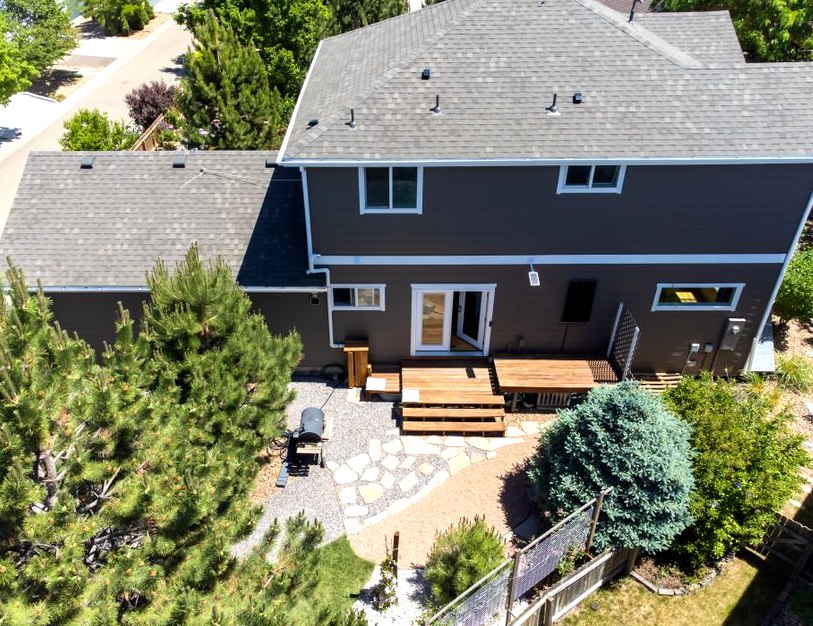
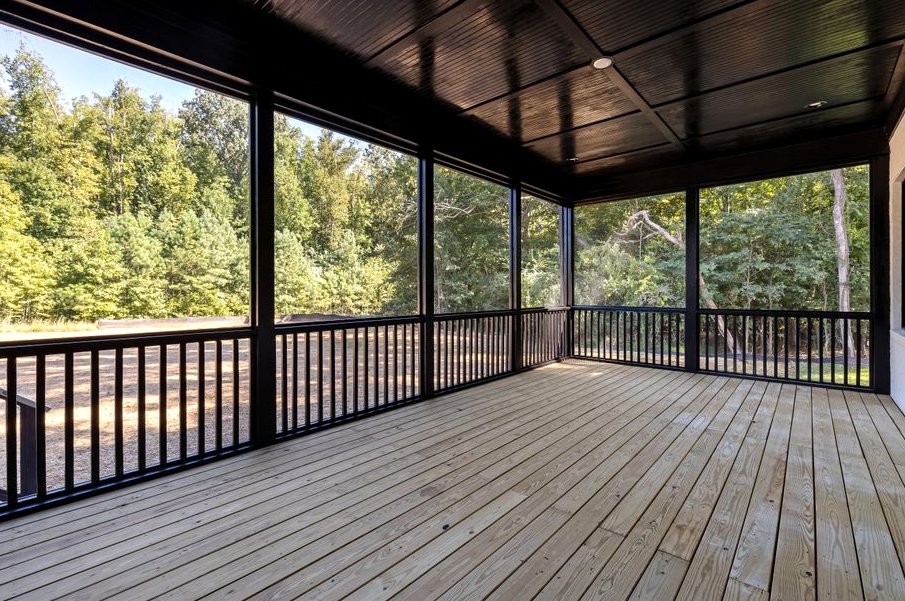
We also build pergolas, freestanding or attached to a deck, for people who want some structure overhead and a defined edge to the space. Screened porches are another regular job: a roofed, enclosed area where you can sit outside without the bugs. We plan these as part of the same project as the deck, because the framing underneath has to carry whatever goes on top of it.
If you're thinking bigger, say a deck that steps down to a seating area, a covered section by the kitchen door, or a pergola over a dining spot, we can plan it as one build or in phases.
How we look at a problem before quoting
We don't price a deck from a phone description. We come out, walk the whole structure, and look at it from underneath as well as on top, because the surface is the least reliable indicator of what's happening below. We check how the frame meets the house, how the posts sit, whether the footings are where they should be, and whether water has a place to go or just sits.
For a repair, we want to know what's causing the damage, not just where it shows. A replaced board over a frame that is still moving will look good for a season and then go back to how it was. Sometimes a section can wait and only one part needs attention now. Sometimes the answer is bigger than the customer hoped. We'd rather say so at the estimate than discover it halfway through.
For a new build, the look-over covers the site itself: slope, where water runs, access for materials, and where the structure wants to sit. You get the reasoning behind the number.
Careful work versus a quick patch
A new deck starts before any lumber is cut. We lay the area out with strings, stakes, and batter boards before we dig or frame anything. It's slow, plain work, and it's how you end up with square corners and footings in the right spots instead of a deck that is slightly off and has to be argued into place later.
Permits come early too. We confirm permit, setback, and inspection requirements with the local building authority before construction starts, so the plan we show you can actually be built on your lot. We'd rather find out about a setback on paper than after the footings are poured.
On repairs, a patch covers the symptom. Careful work finds what failed, fixes that, and then closes the surface back up. Once a deck is opened, it's common to find the damage reaches a bit past where it was visible, especially around wet post bases or the connection to the house. We'll show you what we find and say plainly which parts are urgent and which can safely be left alone for now.
What to do first
Start by walking around your deck and looking underneath if you can. Note anything that moves when you step on it, boards that feel soft, rails with play in them, or places where water pools after rain. Take a few photos. You don't need to diagnose anything, just keep a record of what you saw.
If you're planning something new, think about how you'll use the space: dining, a grill, a quiet corner, a roofed section. A rough sketch or a list is plenty. We'll sort out sizes, permits, and materials together, including whether a pergola or screened porch belongs in the plan.
Then call us. We'll come to the house, look at the site or the existing structure, and tell you what we'd do. If we're not the right fit for the job, we'll say so.
A Look at the Work
A few photos representative of the work.


Choose Your Service
 Deck Building CustomA custom deck is drawn for your house and your yard instead of pulled from a stock plan.Deck BuilderA deck is built in a set order: frame first, then the boards, then stairs and rail.PatiosWhen a patio slab cracks and drops, when water runs toward the back door instead of away from it, or when the cover overhead was framed from whatever lumber was on sale, the space stops getting used.
How It Works
-
Call or Text
A two-minute call is enough to tell us what we're working with and what to check first.
-
On-Site Inspection
A tech inspects the problem in person — no guessing from photos, no drive-by quotes.
-
Clear, Written Quote
We put the fix, the timeline, and the number on paper — take your time with it.
Depending on what we find, that can mean:
- Verify guardrail height, baluster spacing, stair riser, and tread dimensions at final inspection.
- Lay out the deck area with strings, stakes, and batter boards before digging or framing.
Typical Grants Pass Pricing
Ranges to budget around - every situation is priced on its own specifics.
$700–$1300
$50–$450
Frequently Asked Questions
The provided facts do not give one universal average, but they identify the main cost buckets: labor $8,100-$12,100, decking $3,200-$4,800, framing $1,800-$3,000, railing $1,400-$2,600, stairs $700-$1,300, permits $50-$450, and fasteners $56-$1,100. Your final price moves with deck size, material grade, height, access, soil, and inspection-required details.
Building it yourself may reduce the labor line item, which the provided facts place at $8,100-$12,100, but you still need decking, framing, railing, stairs, permits, and fasteners. DIY also requires layout, footing verification, ledger flashing, and code compliance. If you lack experience, mistakes in structure or flashing can cost more than professional installation.
Look for a contractor who confirms permits, setbacks, and inspection requirements before starting; lays out the deck area with strings, stakes, and batter boards; excavates and forms footings, then verifies depth and bearing before concrete; installs posts and beams for the load path; and flashes the ledger board. Get a written estimate, proof of insurance, references, and clear warranty and change-order terms.
It is a squaring check used during layout. The provided process says to lay out the deck area with strings, stakes, and batter boards before digging or framing; a 3-4-5 measurement is a common way to confirm those layout lines meet at a right angle before footings and framing begin.
Usually, yes: the provided process says confirm permits, setbacks, and inspection requirements with the local building authority before construction starts. Permit fees in the facts range $50-$450. Requirements vary by height, attachment to the house, footing depth, and zoning. Have the contractor verify before digging, because unpermitted work can affect inspections, insurance, and resale.
Tipping is not required. Deck builders are paid for a contracted scope, and the provided cost ranges cover labor, materials, railing, stairs, permits, and fasteners. If the crew exceeds expectations, such as a clean site, careful flashing, clear communication, and problem-solving, many homeowners give a modest holiday tip, meal, or positive review. Base any extra gesture on satisfaction, not obligation.
Serving Grants Pass and Nearby
Based in Grants Pass, OR. Call (458) 229-4197 to confirm coverage for your address.
Where We Stand Before You Call
- Free Estimates
- You pay for work, never for the quote.
- Photos of the finished work
- You get pictures of what was done, even the parts you can't see.
- We do what we quoted
- No upsells bolted on once we're on site.
Straightforward Pricing
Get a free quote today — call (458) 229-4197.